
A biological safety cabinet (BSC), also known as a biosafety cabinet, is an enclosed, ventilated laboratory workspace designed to protect personnel, products, and the environment from exposure to biological agents and hazardous materials.
Biosafety cabinets are essential for laboratories working with infectious microorganisms, cell cultures, clinical specimens, and other biohazardous materials requiring containment and sterile working conditions.
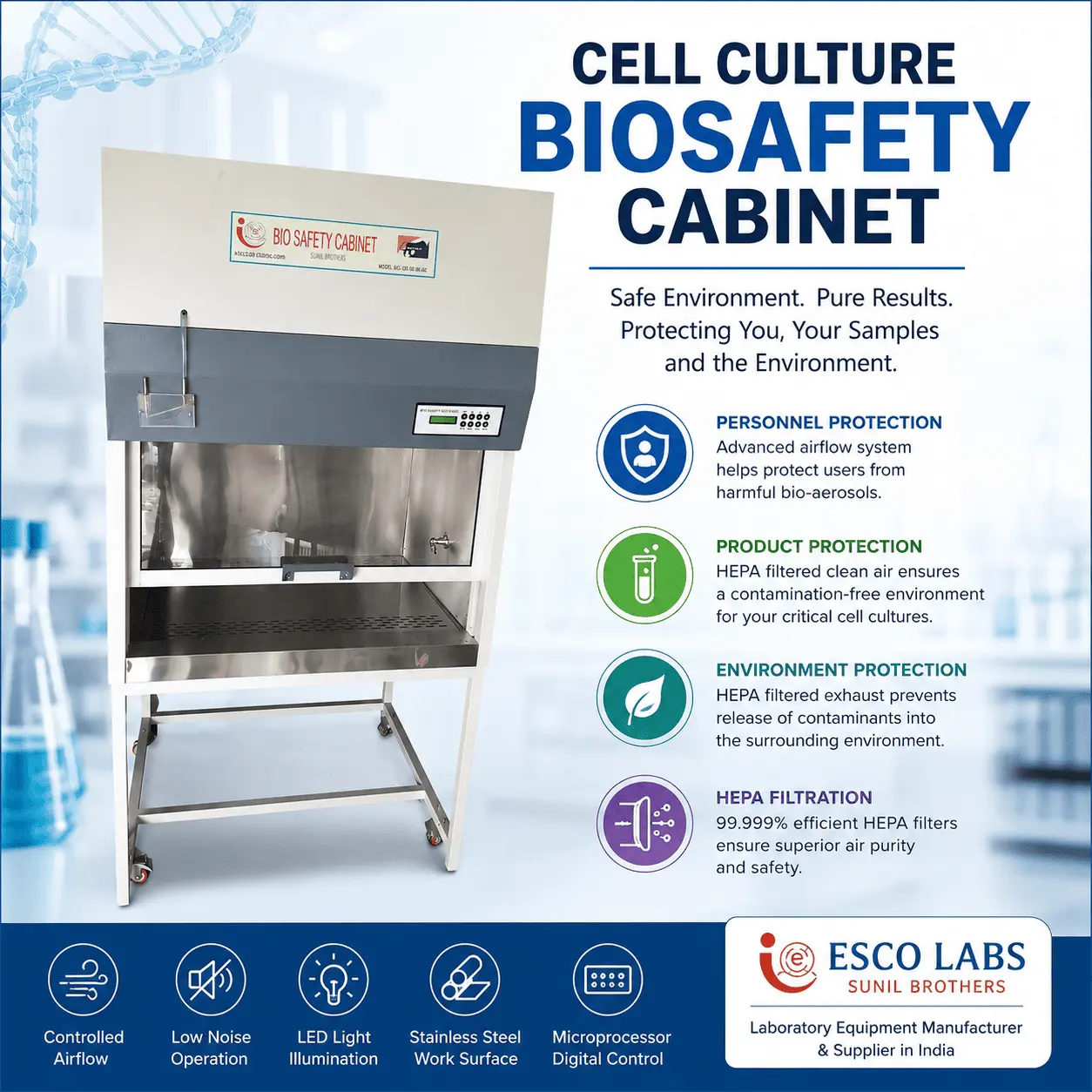
A biological safety cabinet is a primary containment device used in laboratories to provide a safe working environment when handling biological agents. It combines HEPA filtration, controlled airflow, and physical barriers to protect the operator, the work product, and the surrounding environment.
BSCs are classified into different types based on their design, airflow patterns, and level of protection. These cabinets are essential for compliance with biosafety guidelines and regulatory standards.
Biosafety cabinets are classified into three main classes based on their design and protection capabilities:
Class I Biosafety Cabinet: Provides personnel and environmental protection but does not protect the product from contamination. Air is drawn inward through the work opening and exhausted through a HEPA filter.
Class II Biosafety Cabinet: Provides personnel, product, and environmental protection. It features a HEPA-filtered laminar airflow over the work surface and is the most commonly used type in laboratories handling biological agents.
Class III Biosafety Cabinet: A gas-tight, totally enclosed cabinet providing the highest level of containment for work with highly hazardous biological agents. It is used in maximum containment laboratories.
The working principle of a biosafety cabinet involves creating a controlled airflow pattern that prevents the escape of biological agents. Air is drawn into the cabinet through the front grille, creating a protective air barrier that prevents contaminants from leaving the work area.
HEPA filters remove airborne particles, microorganisms, and aerosols. In Class II cabinets, filtered air is directed downward over the work surface in a laminar flow pattern, protecting the product from contamination while exhausting safely through additional filtration.
Biosafety cabinets are used in a wide range of applications, including:
Microbiology and Clinical Laboratories: Handling infectious microorganisms, clinical specimens, and diagnostic samples.
Pharmaceutical and Biotechnology: Cell culture, drug development, and vaccine research.
Medical and Healthcare: Preparation of sterile medications, chemotherapy drugs, and tissue processing.
Research and Academic Laboratories: Molecular biology, genetic engineering, and virology research.
Biosafety cabinets offer essential protection and operational benefits for laboratories handling biological materials:
Personnel Protection: Prevents exposure to biohazardous aerosols and infectious agents.
Product Protection: Maintains a sterile work environment to protect samples and products from contamination.
Environmental Protection: Contains hazardous materials and prevents their release into the laboratory environment.
Regulatory Compliance: Helps laboratories meet biosafety standards and regulatory requirements.
Versatility: Available in various sizes and configurations to suit different applications.
Selecting the appropriate biosafety cabinet depends on the type of work, the level of containment required, and space considerations. Class II cabinets are suitable for most laboratory applications, while Class III cabinets are required for work with high-risk biological agents.
Important factors to consider include cabinet size, airflow type, exhaust configuration, noise level, and ease of cleaning. Consulting with biosafety experts and equipment suppliers helps ensure the right choice for your laboratory.
Regular maintenance and certification of biosafety cabinets are essential for ensuring safe and effective operation. This includes annual certification by qualified technicians to verify airflow, HEPA filter integrity, and overall cabinet performance.
Routine cleaning, filter replacement, and pre-filter maintenance should be performed according to manufacturer guidelines. Proper maintenance extends the life of the cabinet and ensures continued protection.
Biological safety cabinets are essential equipment for laboratories handling biological agents and hazardous materials. Understanding the types, working principles, and applications helps laboratories select the right equipment and maintain safe working conditions.
Looking for high-quality biosafety cabinets in Haryana? Esco Labs provides reliable and efficient laboratory solutions designed to support research, clinical, and pharmaceutical applications.
Esco Labs provides high-quality laboratory and pharmaceutical equipment designed for reliable performance, precision, safety, and long-term use.. Read More
© Copyright | All Rights Reserved | Designed By Web World India